On Day One of Futuristics, in the afternoon, we created Futuristic Survival/Occupation belts for our Planets.Again, the learning was wide open; I gave the students a model and then they created their own belts for Planetary survival. They loved this activity; they fully embraced the learning and were very creative in their approaches. Students thought of GPS devices, parachutes for rescue, one student even had a button on his belt that would create a "hotel" where the person could sleep for the evening. "Sort of like a huge bouncy castle will blow up out of the belt and be there for the person".The beauty of an activity like this is that these high powered learners go for it...they don't want constraints; they love to explore and create on their own, and they are confident in their learning. The funnest part for me, is when they share, and then they begin to ask each other questions about the belts! Great ideas, sharing, and learning come forth.
On Day One of Futuristics, in the afternoon, we created Futuristic Survival/Occupation belts for our Planets.
Again, the learning was wide open; I gave the students a model and then they created their own belts for Planetary survival.
They loved this activity; they fully embraced the learning and were very creative in their approaches. Students thought of GPS devices, parachutes for rescue, one student even had a button on his belt that would create a "hotel" where the person could sleep for the evening. "Sort of like a huge bouncy castle will blow up out of the belt and be there for the person".
The beauty of an activity like this is that these high powered learners go for it...they don't want constraints; they love to explore and create on their own, and they are confident in their learning. The funnest part for me, is when they share, and then they begin to ask each other questions about the belts! Great ideas, sharing, and learning come forth.
I have been working with a great group of grade 2/3 students in our study of the future. The students are to colonize or create their own planet, and in the process, they learn about thinking skills and how to apply these skills in their learning.
Today we looked at FFOE: fluency, flexibility, originality, and elaboration. I took them through mini activities that demonstrated each:Fluency: list as many things you can think of that are round.... I received lots of responses; the students started with general items; like balls, wheels, and so forth, and then as they ran out of ideas, they started thinking more abstractly and broadly. The idea is to get them thinking of as many as possible, and making connections. Finally, one of the students said, "everything is round as everything is made of atoms". What a fantastic thought and an example of high level thinking!
Flexibility: think of things that are green, but not the usual things like frogs, trees, and grass. Come up with as many ideas as possible. Students had trouble with this, but working in teams they were able to come up with strange ideas such as: "solar panels are green", "the earth may look green if you fly into outer space and take a picture". The idea is to make them flexible in their thinking and look at the colour green in a new way.
Originality and Elaboration:
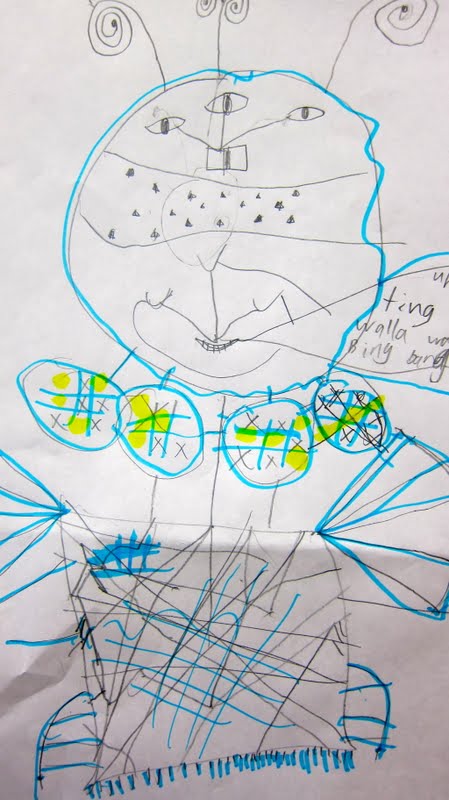
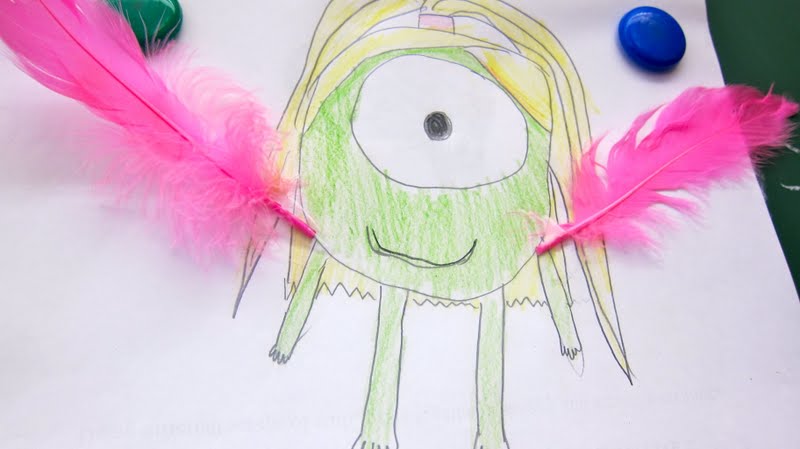
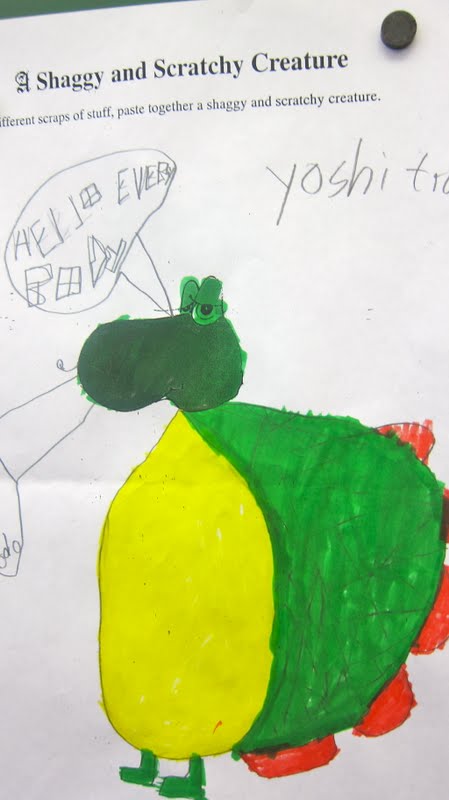
Here, I had the students create their own "creature" that lives on the planet they are designing. They had to use materials to build their creature and talk about how it exists on their planet. Some students used materials, and others drew their creature. They each created their own original creature, and they elaborated with detail. There was a wide range of possibilities. Giving the students choice and keeping it open-ended allowed for each of their own interpretation on the concept. So, the end product turned out very original creatures. If I was teaching a particular art concept, I would have had clear criteria for how things look. But, the process was important and I wanted to see what the students would come up with and how they would view this open ended exercise.
After this, we launched into our project: colonizing and/or creating our own planet.
Criteria:Students could either go to another galaxy and colonize a planet, or move to one in our own galaxy. It was up to them to decide. They have to build and design their own vision of a future colony that take some of these ideas into consideration:- weather conditions, temperature, surface type, gravity, water, food, atmospheric conditions
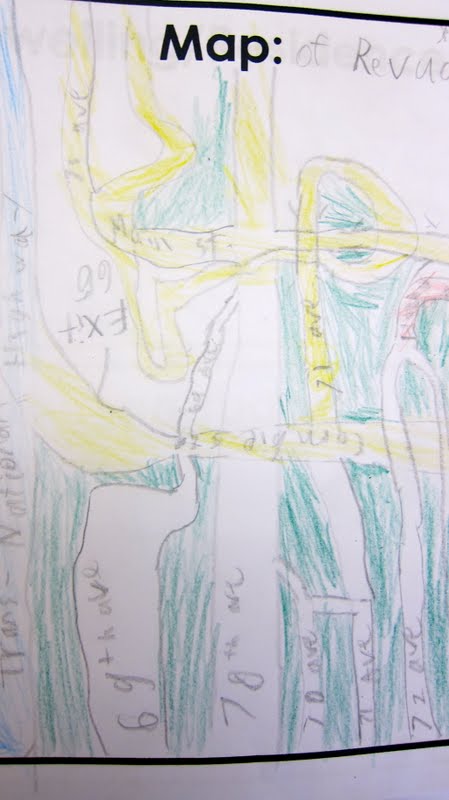
- they have to provide a map of the planet, draw and show what the inhabitants will look like, demonstrate or show how the inhabitants communicate, and provide a flag, and various other ideas about their planets.
Students were very keen to start on their designs. Here are a few samples of their beginning work.
I have been working with a great group of grade 2/3 students in our study of the future. The students are to colonize or create their own planet, and in the process, they learn about thinking skills and how to apply these skills in their learning.
Today we looked at FFOE: fluency, flexibility, originality, and elaboration.
I took them through mini activities that demonstrated each:
Fluency: list as many things you can think of that are round....
I received lots of responses; the students started with general items; like balls, wheels, and so forth, and then as they ran out of ideas, they started thinking more abstractly and broadly. The idea is to get them thinking of as many as possible, and making connections. Finally, one of the students said, "everything is round as everything is made of atoms". What a fantastic thought and an example of high level thinking!
Flexibility: think of things that are green, but not the usual things like frogs, trees, and grass. Come up with as many ideas as possible. Students had trouble with this, but working in teams they were able to come up with strange ideas such as: "solar panels are green", "the earth may look green if you fly into outer space and take a picture". The idea is to make them flexible in their thinking and look at the colour green in a new way.
Originality and Elaboration:
Here, I had the students create their own "creature" that lives on the planet they are designing. They had to use materials to build their creature and talk about how it exists on their planet. Some students used materials, and others drew their creature. They each created their own original creature, and they elaborated with detail. There was a wide range of possibilities. Giving the students choice and keeping it open-ended allowed for each of their own interpretation on the concept. So, the end product turned out very original creatures. If I was teaching a particular art concept, I would have had clear criteria for how things look. But, the process was important and I wanted to see what the students would come up with and how they would view this open ended exercise.
After this, we launched into our project: colonizing and/or creating our own planet.
Criteria:
Students could either go to another galaxy and colonize a planet, or move to one in our own galaxy. It was up to them to decide.
They have to build and design their own vision of a future colony that take some of these ideas into consideration:
- weather conditions, temperature, surface type, gravity, water, food, atmospheric conditions
- they have to provide a map of the planet, draw and show what the inhabitants will look like, demonstrate or show how the inhabitants communicate, and provide a flag, and various other ideas about their planets.
Students were very keen to start on their designs. Here are a few samples of their beginning work.