Showing posts with label thinking skills. Show all posts

Sunday, March 25, 2012

Ski Racing and Authentic Praise in Education

Inside the Ski Racing Mind: Don't Praise Your Children! | Ski Racing

 This is a great article on how we praise children in sports, and particularly, how we often say "good job" or "great work" and praise outcomes rather than processes.  There is a reference to Carol Dweck's research! Basically, the article talks about not praising inborn talent (you are a gifted skier), but rather praise the areas the child has control over, such as effort, attitude, responsibility, commitment, discipline, focus, emotional mastery, fitness, technique, equipment preparation.   

How does this apply to working with gifted students, and all students?  We need to provide opportunities for the inborn talent to emerge, AND provide encouragement and support for the areas the student has control over....their effort, responsibility, their focus, their preparation, and discipline.  Both work together.  (I believe the innate talent is revealed by the emotional maturity and mastery of the student, but this is a entirely different blog post!). 

Our family has fallen into the ski racing world.  Through this world, my sons have learned a great deal about hard work, disappointment, being organized, the importance of a good attitude, and how to work as a team in a very tough sport.  I am so grateful for the lessons they are learning!  The biggest lesson is disappointment.  My older son races really well, but he is not the fastest kid.  He doesn't win medals.  However, he goes to the award ceremonies after the races, and waits patiently, thinking that perhaps, this time, he will get a medal.  Afterwards, he is crestfallen.  He works so hard and there isn't an external reward for him!

So, we use this as a lesson:  we debrief, we talk about disappointment, and hard work, and we try to focus him on the good things, like being in the moment and knowing that you did your best.  It is so hard and tough, but we are building resiliency, one step at a time.  

Let's focus on building resiliency in our students and teaching them that innate abilities are important (and interesting), but that IT IS our intentions, and our effort, and our hard work, and our commitment, and our passion for what we are doing that matter much much more. Disappointment is good.  It refocuses our soul and helps us learn.  


Ski Racing and Authentic Praise in Education

Inside the Ski Racing Mind: Don't Praise Your Children! | Ski Racing

 This is a great article on how we praise children in sports, and particularly, how we often say "good job" or "great work" and praise outcomes rather than processes.  There is a reference to Carol Dweck's research! Basically, the article talks about not praising inborn talent (you are a gifted skier), but rather praise the areas the child has control over, such as effort, attitude, responsibility, commitment, discipline, focus, emotional mastery, fitness, technique, equipment preparation.   

How does this apply to working with gifted students, and all students?  We need to provide opportunities for the inborn talent to emerge, AND provide encouragement and support for the areas the student has control over....their effort, responsibility, their focus, their preparation, and discipline.  Both work together.  (I believe the innate talent is revealed by the emotional maturity and mastery of the student, but this is a entirely different blog post!). 

Our family has fallen into the ski racing world.  Through this world, my sons have learned a great deal about hard work, disappointment, being organized, the importance of a good attitude, and how to work as a team in a very tough sport.  I am so grateful for the lessons they are learning!  The biggest lesson is disappointment.  My older son races really well, but he is not the fastest kid.  He doesn't win medals.  However, he goes to the award ceremonies after the races, and waits patiently, thinking that perhaps, this time, he will get a medal.  Afterwards, he is crestfallen.  He works so hard and there isn't an external reward for him!

So, we use this as a lesson:  we debrief, we talk about disappointment, and hard work, and we try to focus him on the good things, like being in the moment and knowing that you did your best.  It is so hard and tough, but we are building resiliency, one step at a time.  

Let's focus on building resiliency in our students and teaching them that innate abilities are important (and interesting), but that IT IS our intentions, and our effort, and our hard work, and our commitment, and our passion for what we are doing that matter much much more. Disappointment is good.  It refocuses our soul and helps us learn.  


Wednesday, May 11, 2011

Futuristics


I have been working with a great group of grade 2/3 students in our study of the future.  The students are to colonize or create their own planet, and in the process, they learn about thinking skills and how to apply these skills in their learning.


Today we looked at FFOE:  fluency, flexibility, originality, and elaboration.  
I took them through mini activities that demonstrated each:

Fluency:  list as many things you can think of that are round....

I received lots of responses; the students started with general items; like balls, wheels, and so forth, and then as they ran out of ideas, they started thinking more abstractly and broadly.  The idea is to get them thinking of as many as possible, and making connections.  Finally, one of the students  said, "everything is round as everything is made of atoms". What a fantastic thought and an example of high level thinking! 


Flexibility:  think of things that are green, but not the usual things like frogs, trees, and grass.  Come up with as many ideas as possible.  Students had trouble with this, but working in teams they were able to come up with strange ideas such as:  "solar panels are green", "the earth may look green if you fly into outer space and take a picture".  The idea is to make them flexible in their thinking and  look at the colour green in a new way.


Originality and Elaboration:


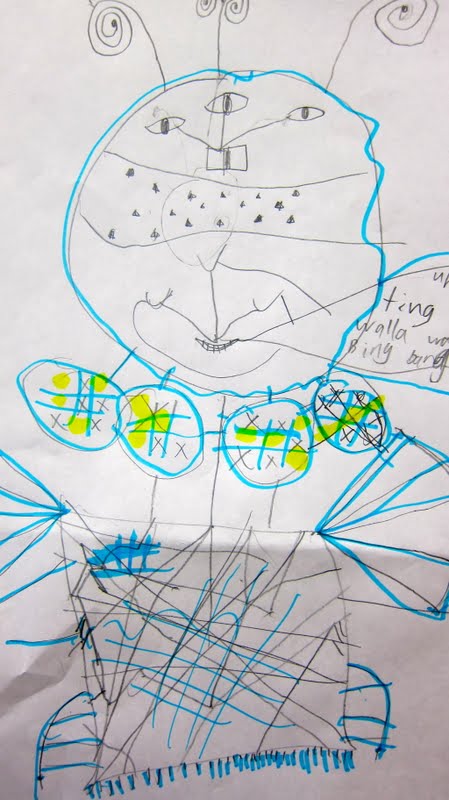
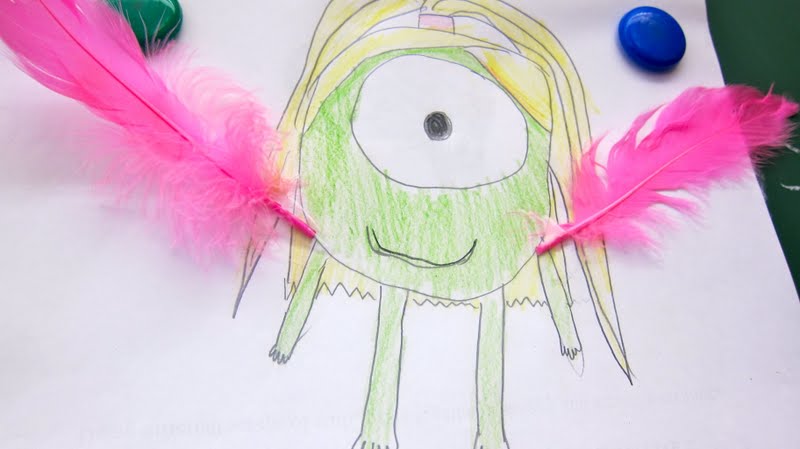
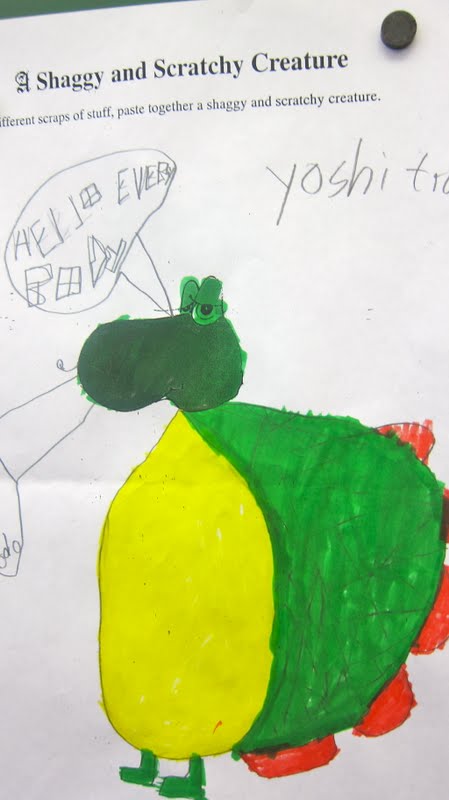
Here, I had the students create their own "creature" that lives on the planet they are designing.  They had to use materials to build their creature and talk about how it exists on their planet.  Some students used materials, and others drew their creature.  They each created their own original creature, and they elaborated with detail.  There was a wide range of possibilities. Giving the students choice and keeping it open-ended allowed for each of their own interpretation on the concept.  So, the end product turned out very original creatures.  If I was teaching a particular art concept, I would have had clear criteria for how things look. But, the process was important and I wanted to see what the students would come up with and how they would view this open ended exercise.


After this, we launched into our project:  colonizing and/or creating our own planet.  


Criteria:
Students could either go to another galaxy and colonize a planet, or move to one in our own galaxy.  It was up to them to decide. 

They have to build and design their own vision of a future colony that take some of these ideas into consideration:
  • weather conditions, temperature, surface type, gravity, water, food, atmospheric conditions
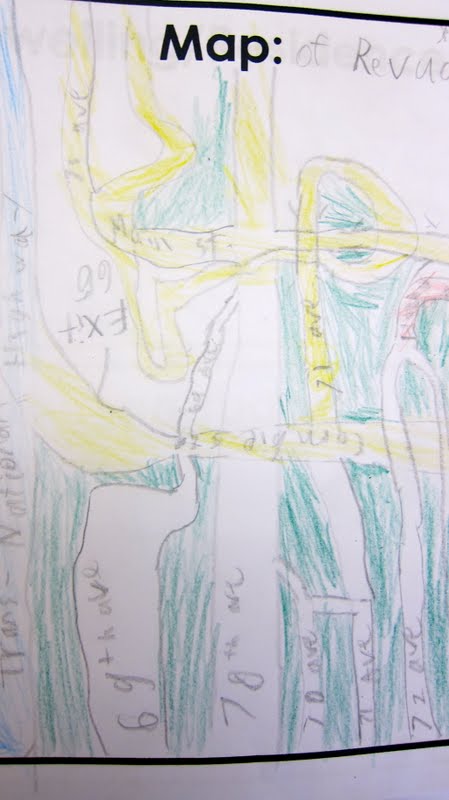
  • they have to provide a map of the planet, draw and show what the inhabitants will look like, demonstrate or show how the inhabitants communicate, and provide a flag, and various other ideas about their planets.
Students were very keen to start on their designs.   Here are a few samples of their beginning work.


Futuristics


I have been working with a great group of grade 2/3 students in our study of the future.  The students are to colonize or create their own planet, and in the process, they learn about thinking skills and how to apply these skills in their learning.


Today we looked at FFOE:  fluency, flexibility, originality, and elaboration.  
I took them through mini activities that demonstrated each:

Fluency:  list as many things you can think of that are round....

I received lots of responses; the students started with general items; like balls, wheels, and so forth, and then as they ran out of ideas, they started thinking more abstractly and broadly.  The idea is to get them thinking of as many as possible, and making connections.  Finally, one of the students  said, "everything is round as everything is made of atoms". What a fantastic thought and an example of high level thinking! 


Flexibility:  think of things that are green, but not the usual things like frogs, trees, and grass.  Come up with as many ideas as possible.  Students had trouble with this, but working in teams they were able to come up with strange ideas such as:  "solar panels are green", "the earth may look green if you fly into outer space and take a picture".  The idea is to make them flexible in their thinking and  look at the colour green in a new way.


Originality and Elaboration:


Here, I had the students create their own "creature" that lives on the planet they are designing.  They had to use materials to build their creature and talk about how it exists on their planet.  Some students used materials, and others drew their creature.  They each created their own original creature, and they elaborated with detail.  There was a wide range of possibilities. Giving the students choice and keeping it open-ended allowed for each of their own interpretation on the concept.  So, the end product turned out very original creatures.  If I was teaching a particular art concept, I would have had clear criteria for how things look. But, the process was important and I wanted to see what the students would come up with and how they would view this open ended exercise.


After this, we launched into our project:  colonizing and/or creating our own planet.  


Criteria:
Students could either go to another galaxy and colonize a planet, or move to one in our own galaxy.  It was up to them to decide. 

They have to build and design their own vision of a future colony that take some of these ideas into consideration:
  • weather conditions, temperature, surface type, gravity, water, food, atmospheric conditions
  • they have to provide a map of the planet, draw and show what the inhabitants will look like, demonstrate or show how the inhabitants communicate, and provide a flag, and various other ideas about their planets.
Students were very keen to start on their designs.   Here are a few samples of their beginning work.


Sunday, May 8, 2011

The Word Try

 
I have always taught my kids to "try" their best.  As long as they are working toward something, and putting in the effort, I am happy.  So, it was with great interest that I read this article in the Huffington Post about parenting and the word "try" not being part of the vocabulary and an excuse: Battle Plan of the Tiger Daughter

When my son comes home with a not so perfect score, and he sees my questioning look, he will tell me "Mom, I tried my best." 

I know that this is true; my sons (both of them) will put in the effort and do their best.  They do not make excuses, they work hard in school, and they love their school.  I am trying to teach them the value of the process of learning, rather than the end result, or grade, or mark.  To value learning intrinsically.  

I am learning in the process too; when I was first a parent, I was very competitive and wanting the best for my sons; however, my eldest son, the true leader and teacher in our family, is not competitive.  He is like his father.  Someone else scores higher on a test....that's great for them!  Someone else is in a faster ski group....great; I'm not ready for that yet.    His younger brother reads faster and bigger books; great, I am reading something else.

Trying is important, the process is important, letting our kids word hard is important, but parenting our children to value learning and where they are in that learning process is the most important thing.  Learning to ask questions, learning to think for themselves, learning to take charge of their ideas and to understand frameworks, processes, and where they fit into it all is valuable.

I especially think this is true for our gifted students.   These students need to learn processes and how to think and how to question and how to make learning their own.  This is only learned by experience, and risk taking, and trying new things.  

I will give an example; I had a student in my program who on the test scores, was completely at the high end of the scale.  When I began working with her,  she was the student that kept coming up and asking, "Can I do this...." or "Is this what you want...." or "Should I do this...".  It seemed like every 15 minutes she had to ask permission from me to do something.  So, I sat her down, and told her that I wanted to see her ideas and that there were no "right answers" here; that she needed to follow criteria, and be creative, and come up with her own ideas.   This was a huge struggle for her.

Then I asked about her school week...what she did at home, was she involved in any extra-curricular activities, and so forth.  And then it all came out:  tutoring,  intense music lessons, studying.  Wow, this student was busy.  But what I wonder and what I come away with is a feeling that perhaps this student just needed time to read on her own, reflect on her own, play with friends, and experience being a child rather than being involved in outcome based activities all the time.

As we reflect on our parenting styles on Mother's Day, let's remember that "try" is important.  It is not an excuse.  It is part of the process that will get us to higher level thinking and help us understand who we are and where we are as learners.

I applaud the author Deanna Fei, who at the end of the article, discusses how she will raise her child:  

"My husband and I made some modifications to our battle plan. We'll emphasize basic diligence and rigor, along with personal choice. We'll probably deploy my mother's line about the word "try," but only if our kids bring home a grade below, say, 92. We won't care if our kids can't play piano for their lives, as long as they pursue some kind of passion. "

This is the process of learning in action:   looking at our parenting as a process and learning from the past, and moving forward with how we will live our lives.

The Word Try

 
I have always taught my kids to "try" their best.  As long as they are working toward something, and putting in the effort, I am happy.  So, it was with great interest that I read this article in the Huffington Post about parenting and the word "try" not being part of the vocabulary and an excuse: Battle Plan of the Tiger Daughter

When my son comes home with a not so perfect score, and he sees my questioning look, he will tell me "Mom, I tried my best." 

I know that this is true; my sons (both of them) will put in the effort and do their best.  They do not make excuses, they work hard in school, and they love their school.  I am trying to teach them the value of the process of learning, rather than the end result, or grade, or mark.  To value learning intrinsically.  

I am learning in the process too; when I was first a parent, I was very competitive and wanting the best for my sons; however, my eldest son, the true leader and teacher in our family, is not competitive.  He is like his father.  Someone else scores higher on a test....that's great for them!  Someone else is in a faster ski group....great; I'm not ready for that yet.    His younger brother reads faster and bigger books; great, I am reading something else.

Trying is important, the process is important, letting our kids word hard is important, but parenting our children to value learning and where they are in that learning process is the most important thing.  Learning to ask questions, learning to think for themselves, learning to take charge of their ideas and to understand frameworks, processes, and where they fit into it all is valuable.

I especially think this is true for our gifted students.   These students need to learn processes and how to think and how to question and how to make learning their own.  This is only learned by experience, and risk taking, and trying new things.  

I will give an example; I had a student in my program who on the test scores, was completely at the high end of the scale.  When I began working with her,  she was the student that kept coming up and asking, "Can I do this...." or "Is this what you want...." or "Should I do this...".  It seemed like every 15 minutes she had to ask permission from me to do something.  So, I sat her down, and told her that I wanted to see her ideas and that there were no "right answers" here; that she needed to follow criteria, and be creative, and come up with her own ideas.   This was a huge struggle for her.

Then I asked about her school week...what she did at home, was she involved in any extra-curricular activities, and so forth.  And then it all came out:  tutoring,  intense music lessons, studying.  Wow, this student was busy.  But what I wonder and what I come away with is a feeling that perhaps this student just needed time to read on her own, reflect on her own, play with friends, and experience being a child rather than being involved in outcome based activities all the time.

As we reflect on our parenting styles on Mother's Day, let's remember that "try" is important.  It is not an excuse.  It is part of the process that will get us to higher level thinking and help us understand who we are and where we are as learners.

I applaud the author Deanna Fei, who at the end of the article, discusses how she will raise her child:  

"My husband and I made some modifications to our battle plan. We'll emphasize basic diligence and rigor, along with personal choice. We'll probably deploy my mother's line about the word "try," but only if our kids bring home a grade below, say, 92. We won't care if our kids can't play piano for their lives, as long as they pursue some kind of passion. "

This is the process of learning in action:   looking at our parenting as a process and learning from the past, and moving forward with how we will live our lives.

Sunday, October 31, 2010

Philosophy for Kids

 
The longer I am a teacher, the more important I believe it is for students to ask questions and think about the world around them.  Time to contemplate and think and figure out these big life questions is what the students did for four days in the Philosophy Challenge Centre.

 What great thinkers did I see....here is a sample of one of the projects created:  it is a learning centre about philosophy.
Over the four days, students were given mini projects to complete.  We worked with ideas such as:  understanding valid arguments, learning about  Plato and his ideas, understanding the nature of reality and truth; learning how to dialogue, and participating in mini research projects on various philosophers. 

Philosophy for Kids

 
The longer I am a teacher, the more important I believe it is for students to ask questions and think about the world around them.  Time to contemplate and think and figure out these big life questions is what the students did for four days in the Philosophy Challenge Centre.

 What great thinkers did I see....here is a sample of one of the projects created:  it is a learning centre about philosophy.
Over the four days, students were given mini projects to complete.  We worked with ideas such as:  understanding valid arguments, learning about  Plato and his ideas, understanding the nature of reality and truth; learning how to dialogue, and participating in mini research projects on various philosophers.